

When you own or manage a commercial property-whether it’s an office building in the Arts District or a sprawling facility near Telecom Corridor-the roof is not just a covering; it is the primary shield for your entire investment. The TPO membrane itself is highly durable, designed to withstand the rigors of North Texas weather extremes. But even the best roofing system has vulnerable points: where things penetrate the surface. These are the seams, the connections, and the joints. To understand why a seemingly small leak can become an astronomical headache, you must first appreciate the meticulous science behind flashing. If you’ve ever wondered why is flashing crucial during TPO roof repair? The answer is that flashing isn't just an accessory-it is the most vital component of your entire waterproof defense. It dictates whether water is safely diverted or if it begins its slow, insidious journey under your membrane, threatening structural integrity from below.
The Hidden Weak Points: Why TPO Roof Repairs Are More Than Just Patching a Leak
It’s a common misconception that when water drips through the roof into an interior ceiling tile in Country Place, the leak is directly above it. This assumption is dangerous because modern commercial flat roofs-especially those utilizing TPO-are designed to manage water movement across their surface. When flashing fails, that water doesn't just fall; it creeps and pools. A seemingly minor drip can be the visible symptom of a major breach in your overall roofing system occurring several feet away from its source.
The most vulnerable points on any commercial flat roof are penetrations: these are the areas where vital systems need to pass through the waterproof shield. We are talking about flashing around HVAC units, large drainage drains, plumbing vent stacks, and exhaust vents. In North Dallas's climate-which experiences massive temperature shifts between scorching summer days and cool nights-these joints are under constant stress. Debris accumulation (leaves, dust, silt) or simple thermal expansion causes the surrounding materials to move, putting immense shearing force on the metal flashing over time.
Flashing’t job is not simply to cover a joint; it is to function as a highly engineered "water shield." It must provide an uninterrupted path for water that immediately redirects runoff away from vulnerable joints and seams, preventing any seepage under the TPO membrane layer. If this happens, even if you successfully patch the visible stain, the underlying structural wood or metal framing has already been compromised by moisture trapped beneath the roof system. We need to think of it as a layered defense-flashing is the first line of critical containment, protecting everything that comes after it.
Understanding Flashing’s Role in Commercial Roofing Integrity (The Science)
To truly grasp why is flashing crucial during TPO roof repair?, you have to look past aesthetics and understand fluid dynamics. For a non-expert, flashing might just be metal strips. For an experienced roofing specialist like myself, it represents a complex engineering solution.
Defining the Shield: What Exactly Is Flashing?
Flashing refers to specialized, durable materials-often copper, galvanized steel, or aluminum-that are meticulously installed to transition the TPO membrane up and over all vertical structures. Think of parapet walls (the low wall surrounding the roof perimeter), vent chases, and pipe sleeves. The flashing must physically overlap these transitions, creating a watertight barrier that matches or exceeds the durability of the main roofing material itself.
The Mechanics of Water Movement
Water doesn't gently trickle; it flows with force. Flashing systems must be configured correctly-sometimes using overlapping layers like step flashing, sometimes incorporating integrated metal jambs-to guide this flow outward and downward toward designated drains. If the flashings are not properly layered or sealed, water is highly susceptible to capillary action. This means that even if you think a seam is dry, the porous nature of certain materials allows moisture to be wicked into the joint under pressure, leading to unseen saturation.
Deep Dive into Failure Points
The enemies of flashing are relentless and specific to our environment:
- Corrosion: Standing water, combined with acidic runoff (think acid rain or even just chemically rich industrial run-off), begins to eat away at the metal, creating tiny rust pinholes that allow seepage.
- UV Degradation: The intense North Texas sun is brutal. While TPO resists UV, the adhesives and sealants used on the flashing are vulnerable, becoming brittle and cracking over time.
- Physical Movement: Buildings breathe. Thermal expansion (when metal expands rapidly in the heat) and contraction (when it shrinks at night) constantly stress the joints. If the original installation didn't account for this movement, a simple patch will fail almost immediately.
A proper repair cannot simply involve slapping down a sheet of new material. It must mimic the original flashing system-requiring specialized, durable metals and high-grade sealing compounds that are chemically compatible with both the TPO and the underlying structure while resisting local environmental stressors. This complexity is why the quality of the repair dictates the lifespan of the entire roof.
When Flashing Failure Becomes a Major Cost Concern (The Financial Risk)
Let's talk about money, because this is usually the deciding factor for any facility manager or homeowner. The biggest mistake people make is viewing flashing failure as a small maintenance cost. It is not. Small, unaddressed flash failures are cumulative financial time bombs that escalate exponentially into massive structural repair bills.
When water penetrates beneath the roof system due to failed flashing, it initiates a cascade of secondary damage costs that far outweigh the initial investment needed for proper sealing. We are no longer talking about just minor water stains; we are discussing:
- Rot in Wood Framing: Persistent moisture causes structural wood framing-which often supports interior ceilings and walls-to rot from the inside out, requiring costly replacement and engineering analysis.
- Mold Remediation: Mold growth requires specialized, expensive remediation services that treat not just the visible area but all affected air ducts, materials, and potentially, HVAC units themselves.
- Electrical System Corrosion: Water intrusion near electrical conduits or junction boxes can lead to short circuits, fire hazards, and complete failure of critical building systems-a liability nightmare.
Consider the difference between a "quick fix" and a comprehensive repair. Using cheap patches or inadequate materials is like putting a band-aid on a major structural crack in your foundation; it solves nothing permanently and almost certainly creates new vulnerabilities nearby.
I recall working near Indian Creek, where a beautiful, high-end home had several minor flashing issues around the drainage points that were leaking just enough to cause slow rot in the subfloor over months. The owner initially planned for minimal expenditure, intending only to patch the visible stain. We walked away demonstrating how fixing the flashing system-a much larger scope of work-prevented a total structural gutting and subsequent remediation that would have cost five times the original repair price.
Investing in thorough flashing inspection now is not an expense; it is the most critical preventative roofing inspection services investment you can make, guaranteeing peace of mind and protecting your asset’s long-term value.
Flashing Mastery: How a Professional TPO Repair Differs from DIY Patching
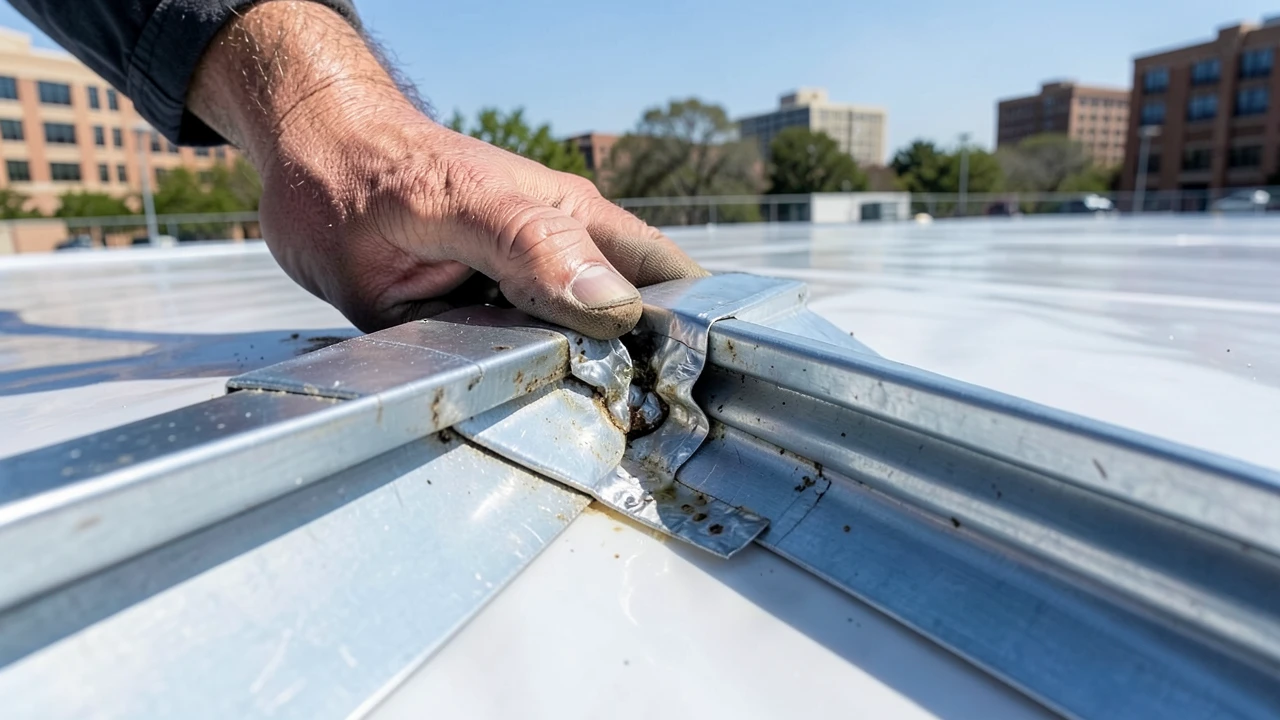
The difference between a weekend warrior attempting a patch job and an expert contractor like those at Rock Line Roofing is the depth of process knowledge-it's about how the repair is performed.
The Meticulous Prep Work
A professional repair begins long before any sealant gun touches the surface. It involves meticulous prep work: thoroughly cleaning all existing materials, scarifying old failed adhesives and compromised metals, and critically assessing the underlying structure (the decking/substrate) to ensure it's sound enough to bear the weight of the new repair. This preparation phase is non-negotiable; it accounts for up to 30% of the success rate of the entire project.
Material Expertise for North Texas
A professional understands that not all metals or sealants are created equal, especially in a climate as variable as ours. We know which specific grade of metal (be it copper for its longevity or galvanized steel for cost-effectiveness) and which proprietary sealant compounds are appropriate for the local Dallas metro climate variability-withstanding both torrential rain and intense heat cycles while ensuring proper adhesion. This knowledge is literally written into our training and decades of experience in commercial roofing systems across North Dallas. A professional understands that not all metals or sealants are created equal, especially when considering the specialized needs of areas like Tenth Street TX roofing experts.
The Full Scope of Work
The most common mistake is addressing only the visible leak spot. A true, professional repair addresses the entire flashing system surrounding that penetrative point-the connection to the parapet wall, the seal under the drain basin, and the seam where it meets the TPO membrane. This comprehensive scope ensures we are fixing the root cause of failure, not just treating the symptom.
As Michael Rodriguez's experience tells us, the best roofing decisions are always made when proactive inspections catch minor issues before they escalate into costly emergencies. We don’t just put down patches; we restore integrity using materials built to last decades in this specific geographical area. Furthermore, when considering comprehensive needs like reliable commercial roof solutions, we manage the process meticulously to minimize disruption, keeping commercial operations running smoothly-a key reassurance for facility managers.
Building a Permanent Shield: Assessing Your TPO Flashing Needs in North Dallas
Given the unique and demanding climate cycles found across North Dallas neighborhoods-from Indian Oaks to Lakewood Heights-specialized flashing repair is absolutely non-negotiable if you want long-term asset protection. Don't wait for an interior ceiling stain; get ahead of the problem.
Actionable Signs You Need a Flashing Inspection
While moisture intrusion is the ultimate sign, there are visible precursors that warrant immediate investigation:
- Visible Rust Streaks: Discolored streaks running down from drains or vents are clear signs of persistent seepage beneath the surface.
- Lifting Seams: Noticeable separation or lifting along seams where the flashing meets the TPO membrane.
- Discoloration Around Drains: Any unusual staining, discoloration, or pooling near drain connections suggests a compromised seal.
The Comprehensive Inspection Process
A thorough assessment goes far beyond simply looking down from the edge of the roof. We inspect inaccessible areas-like under flashed joints and within drain connections that are difficult to view-using specialized techniques. This detailed process allows us to give you an accurate picture, advising on whether a full system remediation or a targeted repair like new roofing installation is needed.
Ultimately, understanding why is flashing crucial during TPO roof repair? boils down to one concept: risk mitigation. The right flashing acts as the final, perfect seal that ensures your investment remains protected from nature's relentless forces. Trusting your roof to an experienced local contractor who understands both the science and the specific needs of North Dallas properties is the smartest move you can make for preserving the value and integrity of your property.
Ready to secure your commercial asset against the elements? We recommend a proactive inspection before any minor issue turns into a major catastrophe. Call us today at +1 469-589-3827 or visit 16211 Red Cedar Trail, North Dallas, TX 75248 to discuss how our 23 years of local expertise can build you a permanent shield against water damage, ensuring peace of mind from your first day of business until decades down the line.