
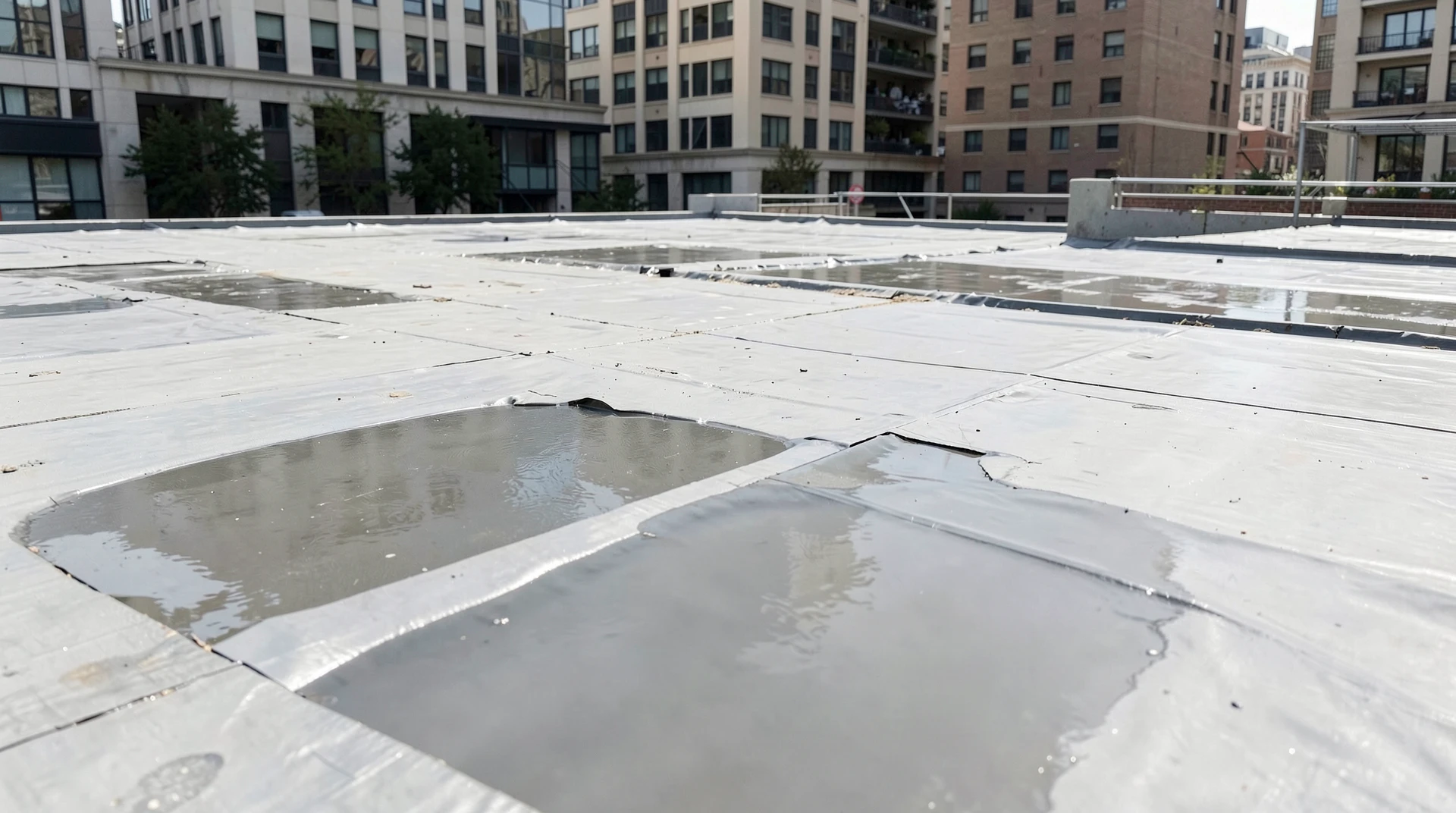
When Standing Water on Low-Slope Roof Membranes Signals More Than Just a Leak
If you are the owner of a high-end commercial or multi-family property in North Dallas, TX-whether it's nestled in Indian Creek, Country Place, or one of the historic districts like Lakewood Heights-you understand that your roof is not just an overhead covering; it's a major investment protecting millions of dollars in assets. When you see standing water on a low-slope membrane, your immediate thought might be: "It’s just a little puddle," or "The leak must be minor." I need to tell you, based on two decades of specializing in complex roofing systems across the Dallas metroplex, that standing water is never merely a cosmetic issue. It is a profound indicator of structural distress.
This pooling water acts like a chemical catalyst for failure. You might assume the membrane is holding up fine because no visible leak has yet appeared inside your building, but what's happening underneath the surface is far more aggressive than just slow dampness. The standing water accelerates material breakdown and creates an ideal environment for hazardous mold and mildew growth that can undermine the entire roofing system from below. Ignoring this warning sign-this pooling water-is like ignoring a small hairline crack in your foundation: it promises to become a catastrophic failure point down the line, leading to costly, unpredictable emergencies.
Understanding Low-Slope Membranes and Why They Hold Water
To appreciate the gravity of the situation, you first need to understand what these membranes are designed to do and how they fail. Modern low-slope roofs typically utilize highly engineered materials like TPO (Thermoplastic Polyolefin) or Modified Bitumen. These systems are phenomenal barriers-they are waterproof shields built to provide a reliable seal over large, flat surfaces that traditional pitched roofing can't cover. Their primary function is not to manage drainage; their job is simply to keep the water out.
The problem arises when the physics of gravity and construction meet poor detailing. Standing water occurs for several specific reasons:
- Poor Pitch: If the roof slope (or "pitch") is too shallow in certain areas, even a minute amount of pooling water will accumulate because gravity can't pull it away fast enough.
- Inadequate Flashing Transitions: Where different materials meet-like around HVAC unit curbs or vertical walls-the flashing transitions are crucial points that, if improperly installed or compromised by debris, allow water to pool and sit against the membrane seam.
- Clogged Drainage Systems: Sometimes the issue is simpler: a clogged drain or gutter system prevents proper runoff, leading to localized ponding areas across the structure.
These pooling zones are particularly vulnerable in North Dallas’s climate. We experience extreme thermal expansion and contraction cycles-the brutally hot summer days followed by cooler nights. This constant cycling puts immense stress on the membrane materials. When combined with standing water sitting atop a compromised seam or inadequate slope, the integrity of the material rapidly diminishes. Understanding this complex relationship is key to finding effective solutions for standing water on low-slope roofs membrane. We must differentiate between merely draining the surface water and identifying the underlying cause-be it structural deficiency, poor installation detail, or outright material failure.
Is It a Patch or a Full Replacement? Assessing Your Membrane Damage
When a homeowner calls us after noticing pooling water, their immediate concern is usually cost: "Is this going to be astronomical?" This hesitation is completely understandable. You are dealing with complex infrastructure, and the last thing you want is unexpected disruption or an enormous repair bill. Our job, utilizing our meticulous inspection process, is to eliminate that guesswork.
The diagnosis is far more comprehensive than simply observing the puddle. An expert assessment involves a multi-point technical review:
- Seam Integrity Check: We examine every seam (where two pieces of membrane meet) and every penetration point (like ductwork or vents). These are always high-risk areas, even if they look dry to the naked eye.
- Adhesion Testing: We check for signs that the material is lifting or detaching from the substrate underneath-a sign of failure that water pooling can accelerate dramatically.
- Substrate Evaluation: Sometimes the membrane itself isn't the problem; it might be the underlying concrete or insulation that has degraded due to chronic moisture exposure.
This detailed assessment allows us to provide clear decision criteria, helping you decide between localized patching and a full replacement. Patching is viable for minor tears or isolated seam failures that haven't been compromised by widespread water retention. However, if the degradation is uniform across large sections of the roof-if multiple seams are failing simultaneously due to thermal stress exacerbated by standing water-then we must recommend a complete membrane overhaul.
I recall working on a major commercial property in Cedar Crest where the pooling was initially localized. We found that the underlying concrete substrate had extensive, decades-old moisture damage beneath the membrane layer, requiring us to treat it as a full systemic replacement rather than just patching the visible tears. This level of transparency is critical for managing your budget and preventing future surprises.
The Lifecycle of Low-Slope Roofing and Prevention in North Dallas
We need to shift the conversation from "repairing a leak" to "investing in asset longevity." For those owning properties in highly desirable, value-retaining neighborhoods like Indian Creek or Country Place, roofing maintenance is not an expense; it's an essential component of preserving property value.
The best solutions for standing water on low-slope roofs membrane are inherently proactive ones. While we handle the crisis management-the emergency leak repair North Dallas needs-we also want to equip you with knowledge on preventative measures:

- Maintain Drainage Access: Ensure that all gutters, scuppers, and primary drains remain completely clear of debris (leaves, silt, gravel). This is perhaps the easiest, most overlooked step.
- Routine Visual Checks: Train your maintenance crew or property manager to look for subtle signs-discoloration, slight shifting seams, or unusual damp spots-before they become obvious puddles.
- Scheduled Professional Inspections: The single greatest piece of advice I can give is the value of a periodic "tune-up" inspection. These visits are scheduled long before minor issues turn into major leaks, allowing us to catch micro-failures when they are cheapest and easiest to fix.
To illustrate this preventative approach, consider the life cycle of a typical TPO membrane. When it’s installed correctly, it can last decades. But if those small drain clogs or poorly maintained flashing joints allow water to sit for months on end during heavy rains-that prolonged saturation is what eats away at the polymer bonds and accelerates failure. This highlights why preventative commercial roofing maintenance is so vital.
Restoring Peace of Mind: Your Next Steps After Identifying a Leak
If you’ve read this far and are now worried about standing water or potential leaks, please take action immediately. Do not wait until you see dark stains on an interior ceiling; those signs mean the problem has been active for some time.
Your Immediate Action Plan:
- Temporary Containment: If the leak is visible, try to contain it with buckets and proper drop cloths to minimize damage to expensive interior finishes.
- Call a Specialist: Contact us immediately. Do not attempt major repairs yourself; low-slope roofing requires specialized training and equipment.
We understand that having contractors on site for an extended period can be disruptive. We’ve refined our processes specifically to address this concern, particularly in dense areas like the Arts District or Junius Heights. When we execute a full membrane replacement, we plan every phase meticulously-from initial tear-off (with proper dumpster staging) to final coating application-so that the mess is contained and the disruption to your daily life is minimized.
We take our local service commitment very seriously. Rock Line Roofing maintains all necessary licensing and insurance specific to the Dallas/North Texas metro area, ensuring every job meets or exceeds local compliance standards. We provide clear warranties because you deserve nothing less than a permanent structural shield built by people who know North Dallas from here to Lakewood Heights.
Michael Rodriguez's Signature Insight: I’ve seen enough roofs in my career to know that the best roofing decisions are always made when proactive inspections catch minor issues before they escalate into costly emergencies. When it comes to solutions for standing water on low-slope roofs membrane, don't guess; call an expert who knows exactly what to look for.
Ready to secure your investment? Contact us today for a detailed, non-obligation inspection and let us restore peace of mind. Call us at +1 469-589-3827 or visit our office at 16211 Red Cedar Trail, North Dallas, TX 75248.